X
Код презентации скопируйте его
Косвенная речь
Скачать эту презентацию


Презентация на тему Косвенная речь
Скачать эту презентациюCлайд 1
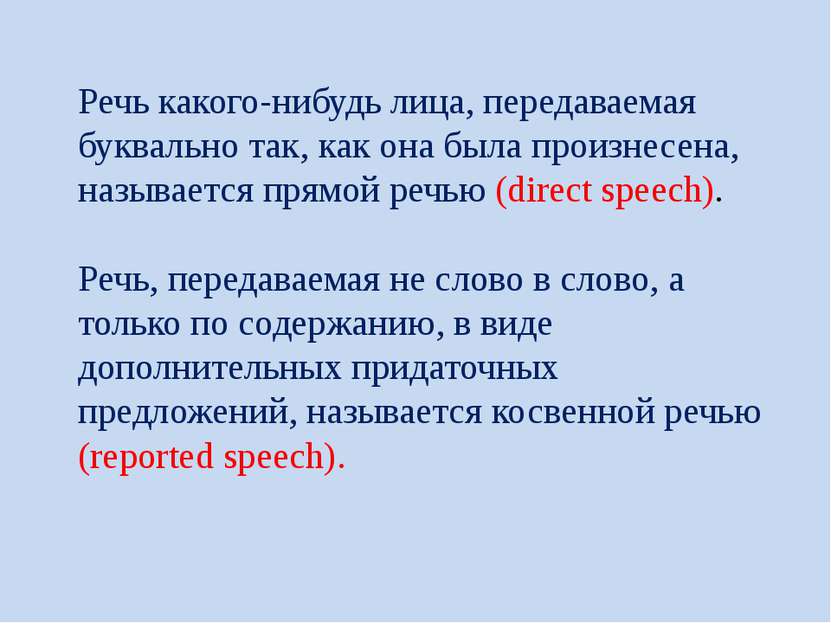
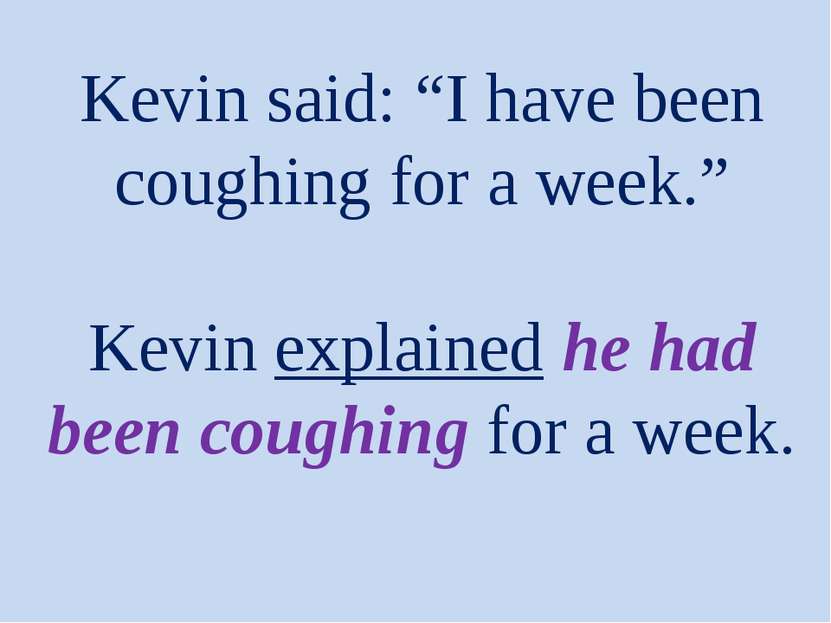
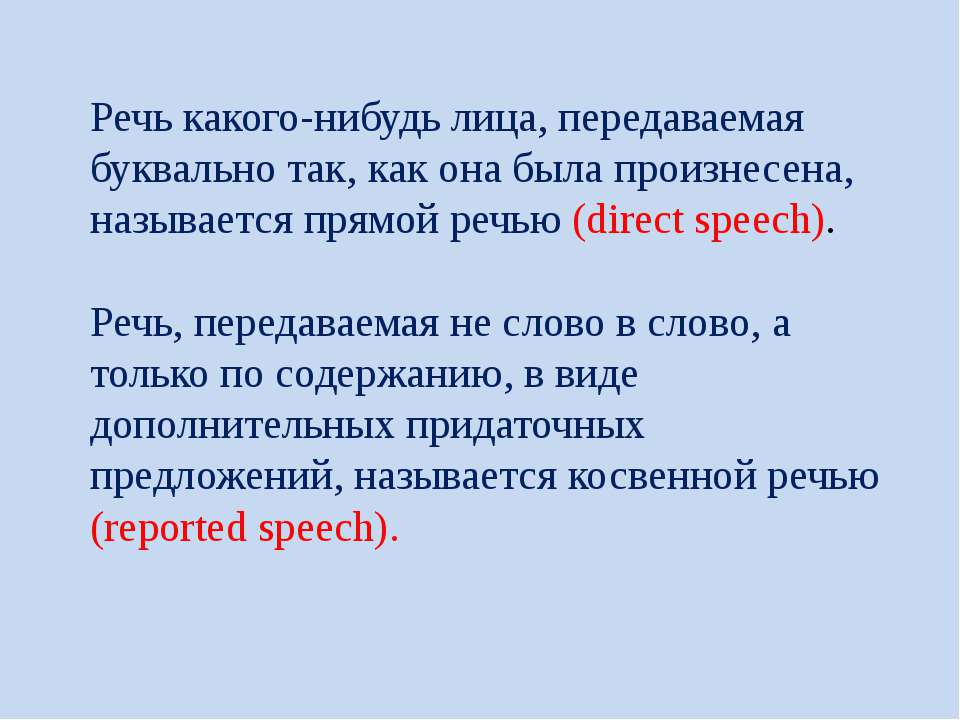
 Речь какого-нибудь лица, передаваемая буквально так, как она была произнесена, называется прямой речью (direct speech). Речь, передаваемая не слово в слово, а только по содержанию, в виде дополнительных придаточных предложений, называется косвенной речью (reported speech).
Cлайд 2
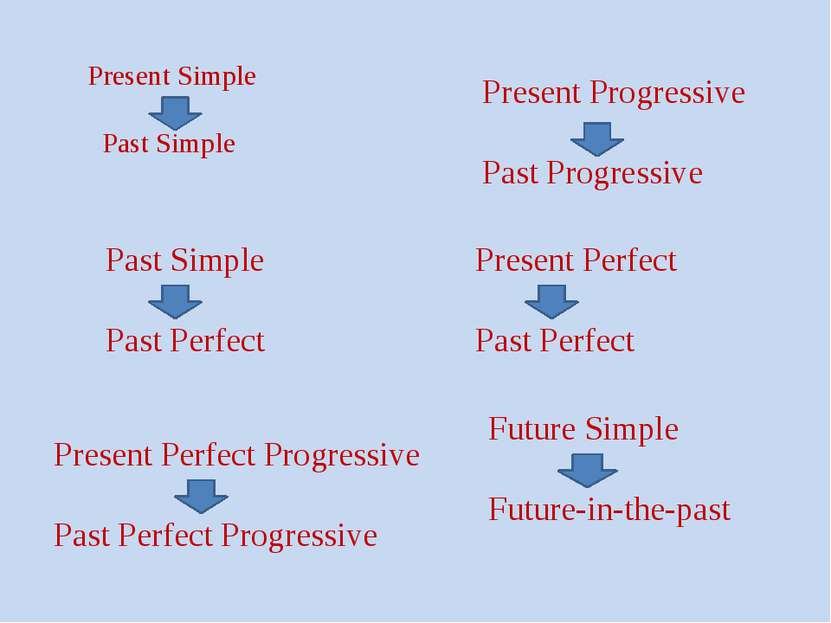
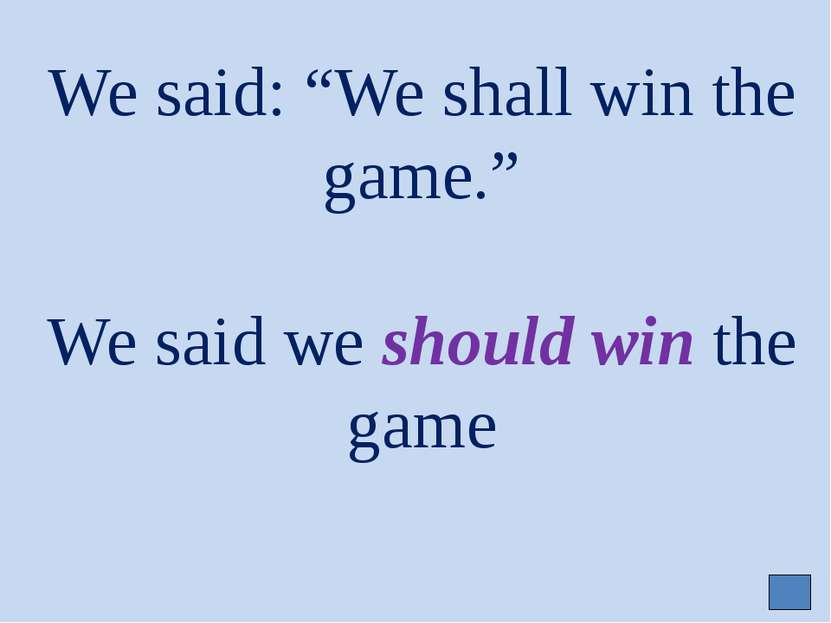
 Present Simple Past Simple Present Progressive Past Progressive Past Simple Past Perfect Present Perfect Past Perfect Present Perfect Progressive Past Perfect Progressive Future Simple Future-in-the-past
Cлайд 3
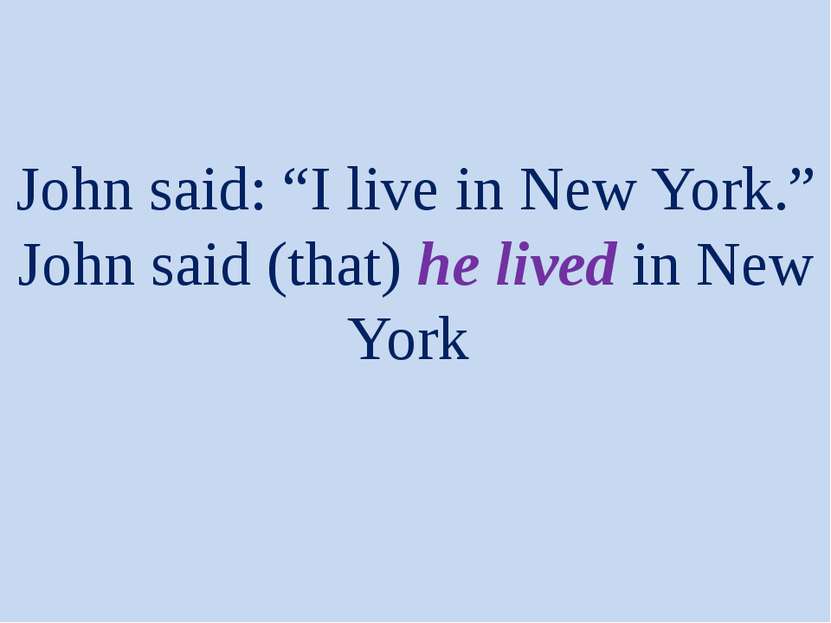
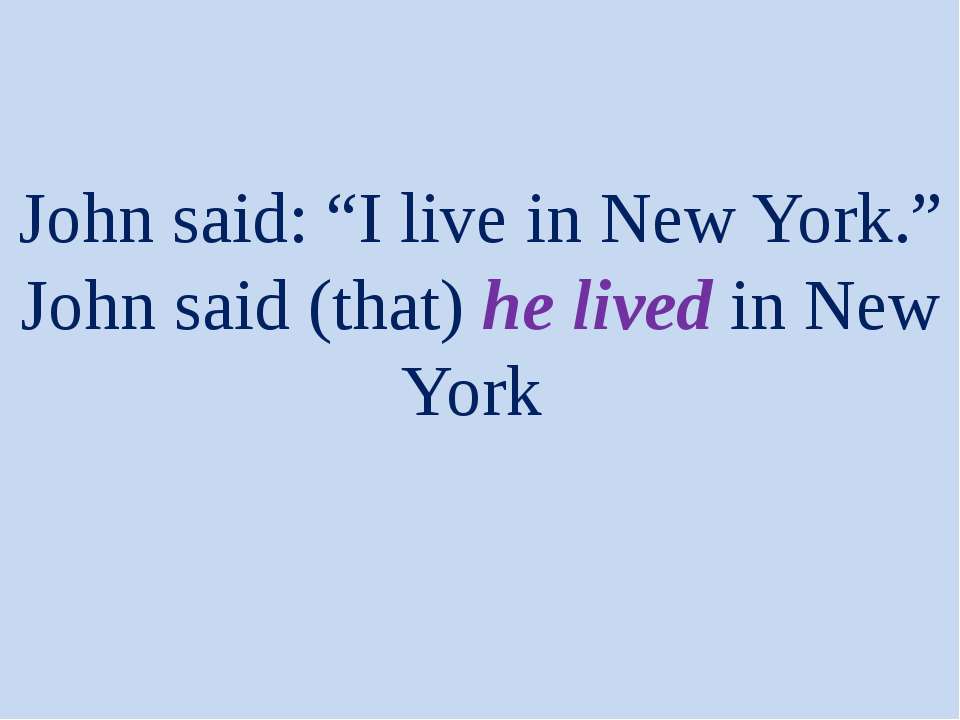
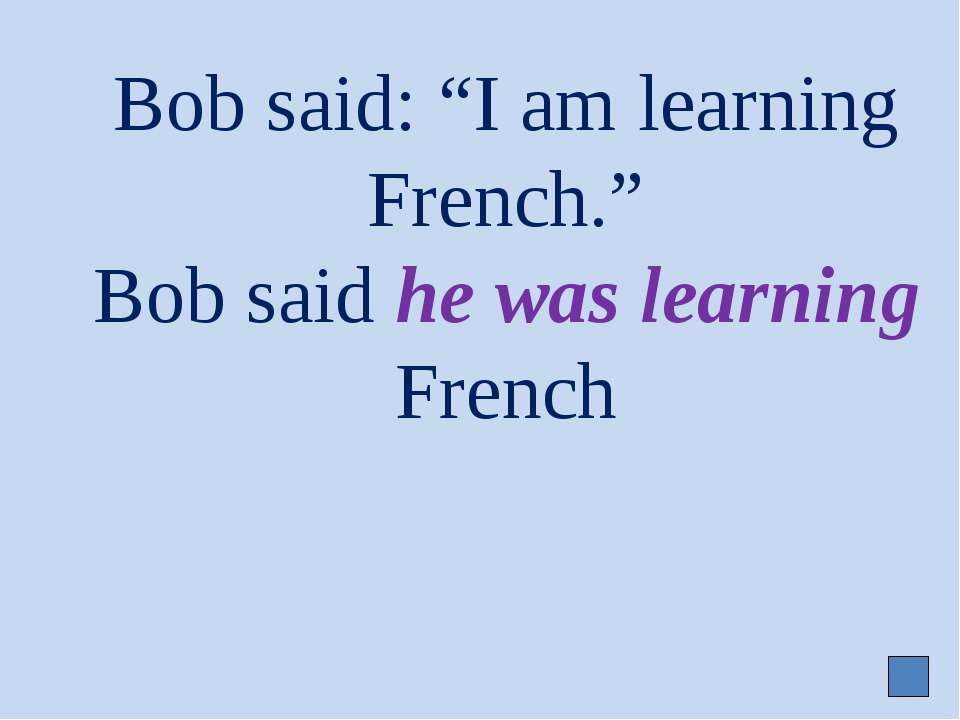
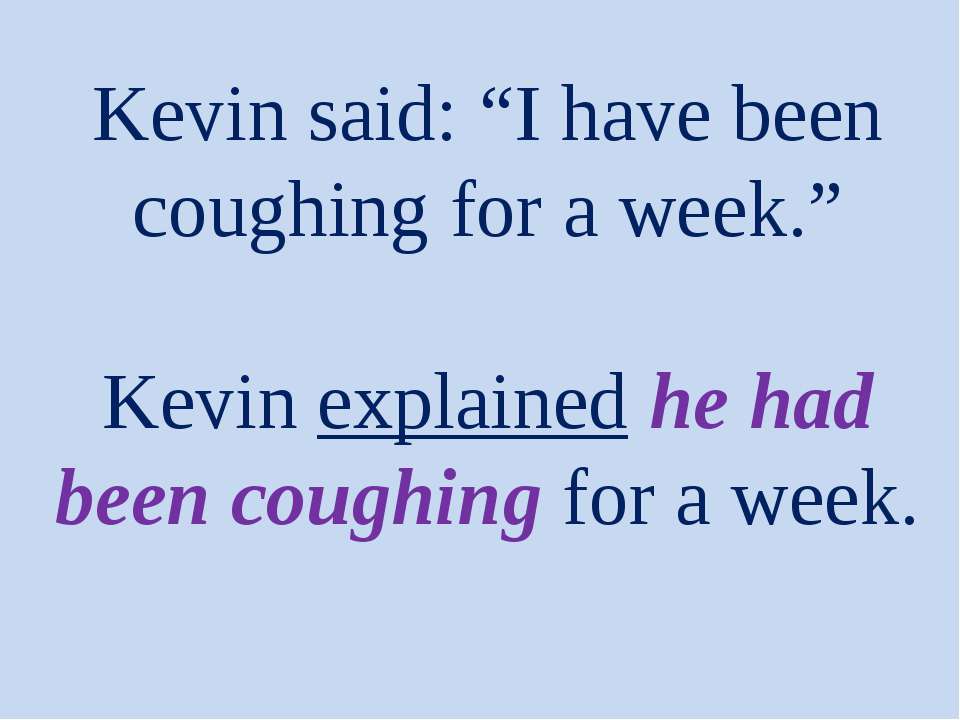
 John said: “I live in New York.” John said (that) he lived in New York
Cлайд 4
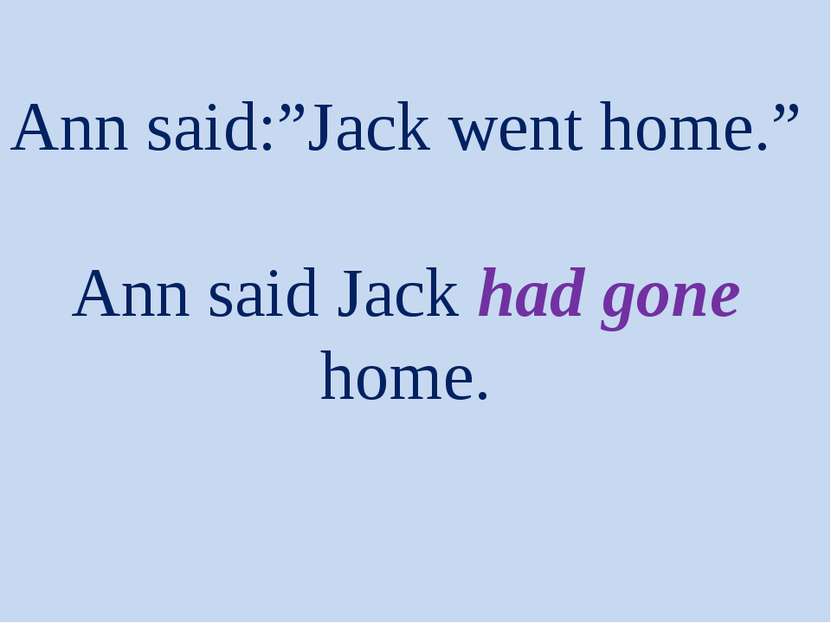
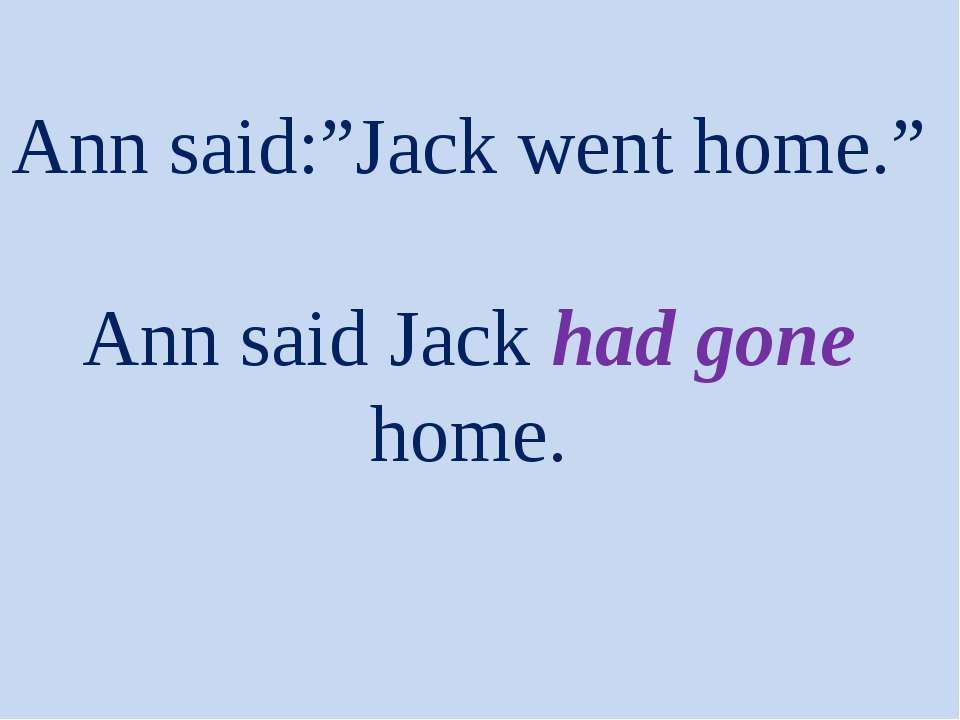
 Ann said:”Jack went home.” Ann said Jack had gone home.
Cлайд 5
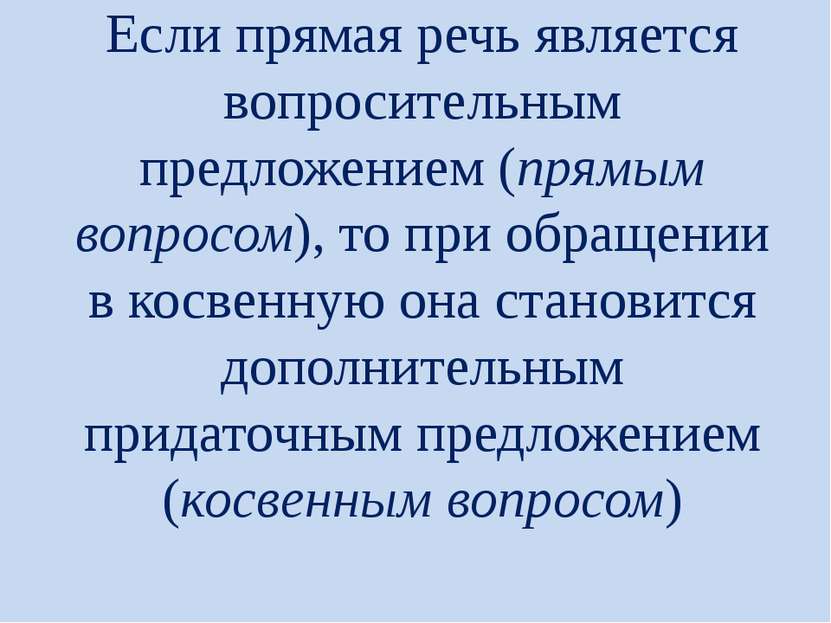
 Прямая речь может представлять собой: 1.повествовательное предложение 2.вопросительное предложение 3.повелительное предложение
Cлайд 6
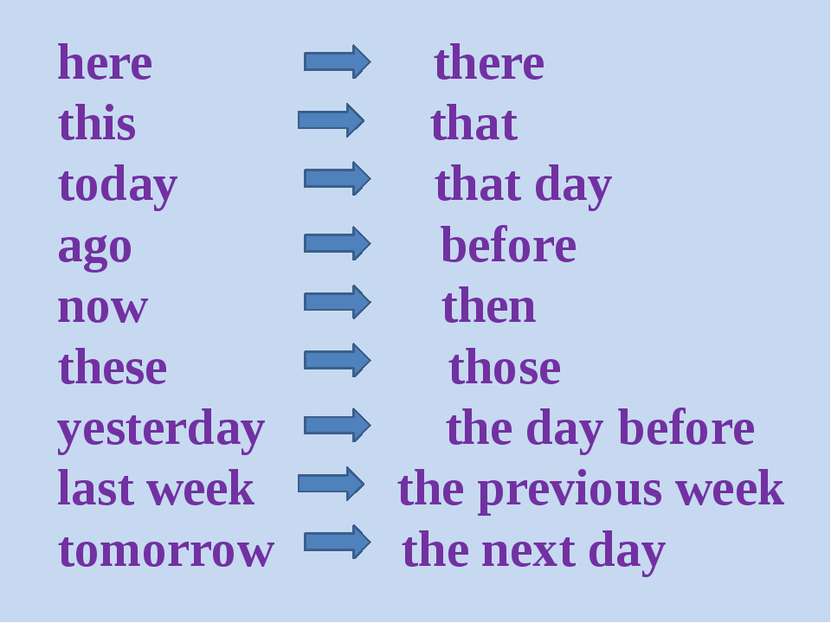
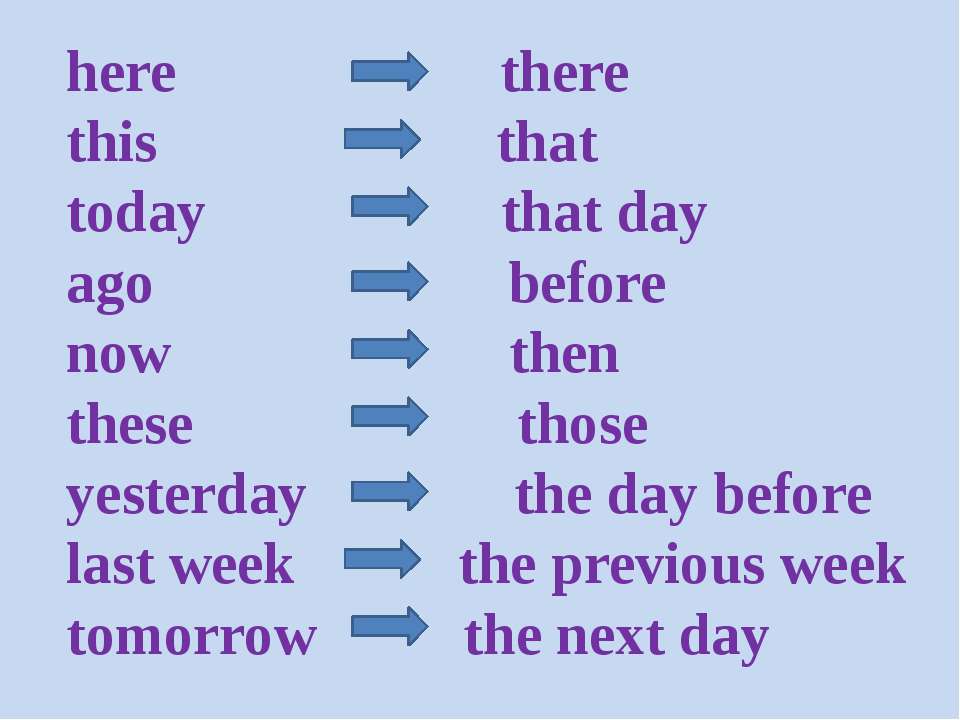
 here there this that today that day ago before now then these those yesterday the day before last week the previous week tomorrow the next day
Cлайд 7
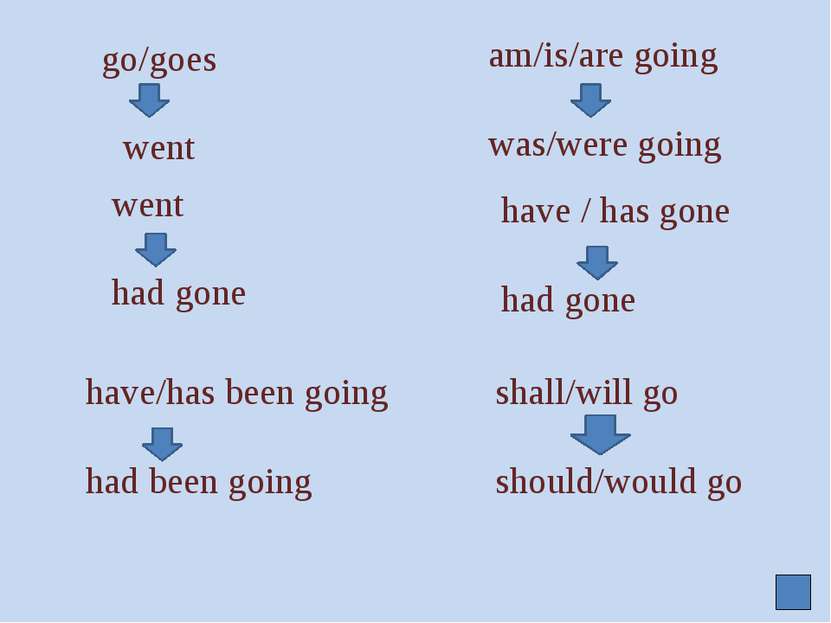
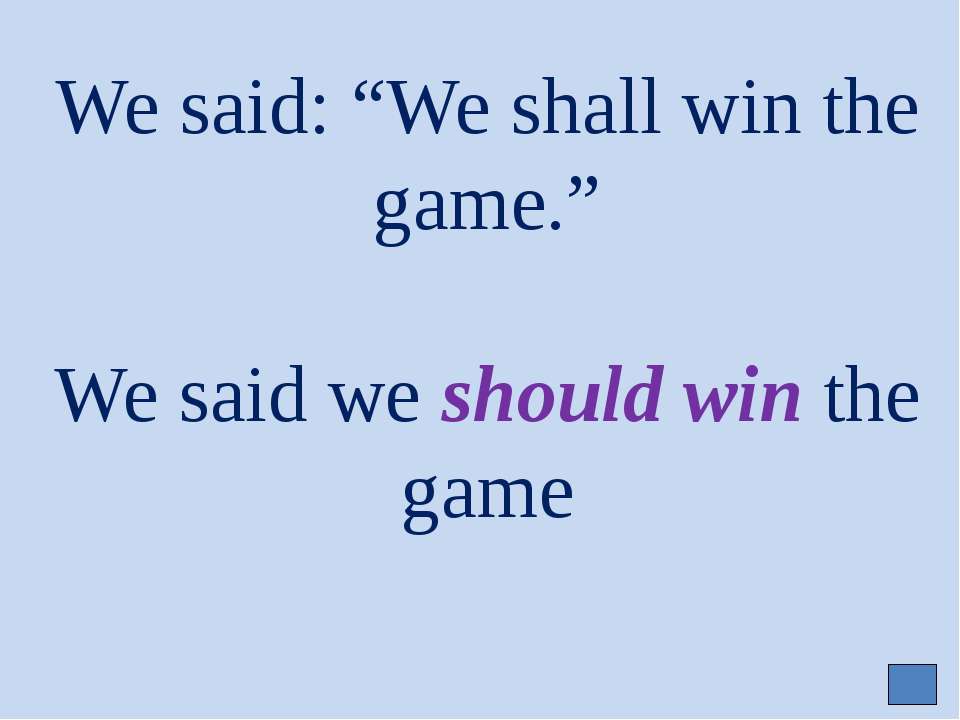
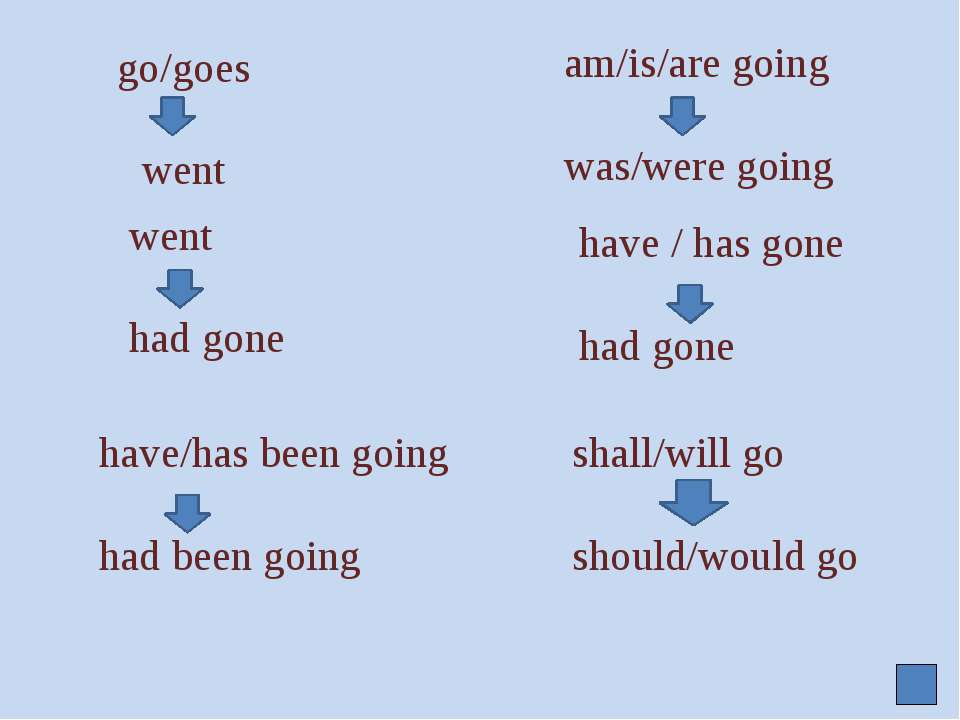 go/goes went am/is/are going was/were going went had gone have / has gone had gone have/has been going had been going shall/will go should/would go
Cлайд 8
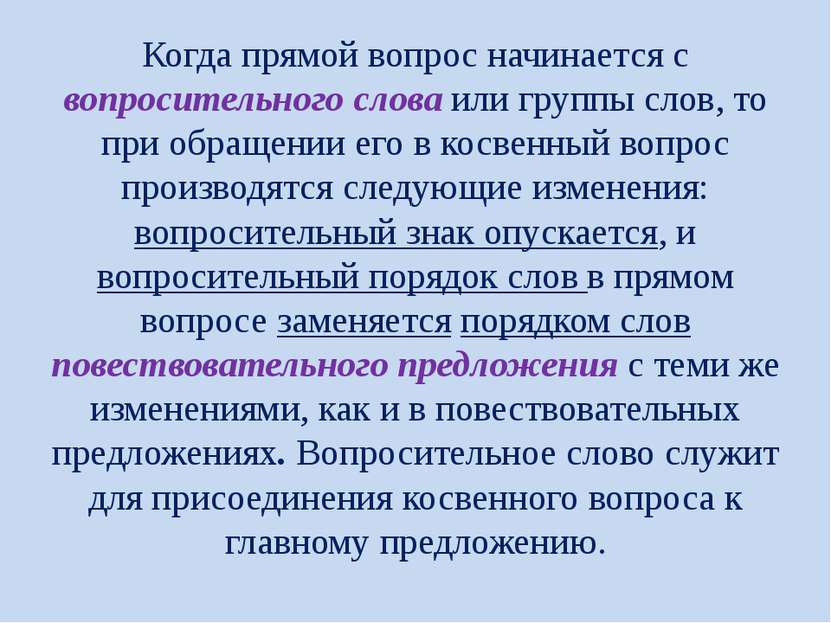
 Когда прямой вопрос начинается с вопросительного слова или группы слов, то при обращении его в косвенный вопрос производятся следующие изменения: вопросительный знак опускается, и вопросительный порядок слов в прямом вопросе заменяется порядком слов повествовательного предложения с теми же изменениями, как и в повествовательных предложениях. Вопросительное слово служит для присоединения косвенного вопроса к главному предложению.
Cлайд 9
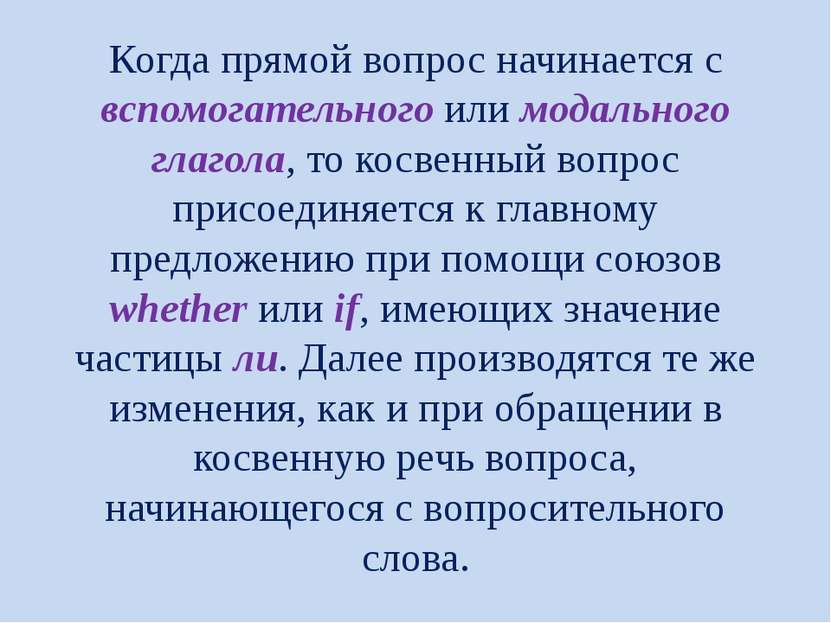
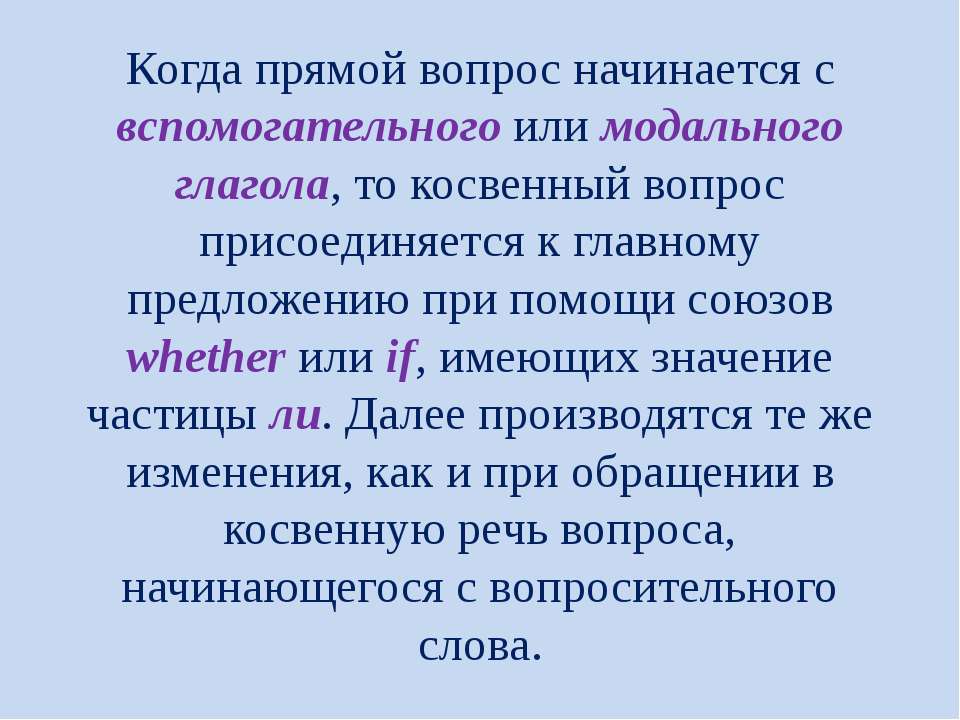
 Когда прямой вопрос начинается с вспомогательного или модального глагола, то косвенный вопрос присоединяется к главному предложению при помощи союзов whether или if, имеющих значение частицы ли. Далее производятся те же изменения, как и при обращении в косвенную речь вопроса, начинающегося с вопросительного слова.
Cлайд 10
 Put them into Reported speech 1. “I’m going to the seaside soon,” she said. 2. “Does this bus stop next station?” asked Helen. 3. He asked her:”Are you working now?” 4. The teacher asked:”Can you play the piano?” 5. I asked her:”Why are you late?” 6. “Who has broken the window?” the teacher asked. 7. “Look at this paper” he said. 8. “Don’t go alone in the evening,” she said.
Cлайд 11
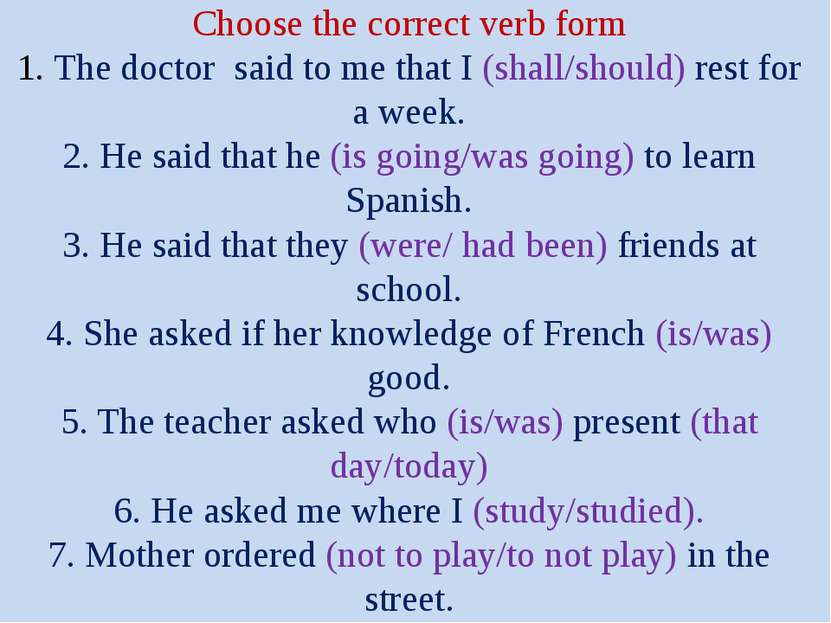
 Choose the correct verb form 1. The doctor said to me that I (shall/should) rest for a week. 2. He said that he (is going/was going) to learn Spanish. 3. He said that they (were/ had been) friends at school. 4. She asked if her knowledge of French (is/was) good. 5. The teacher asked who (is/was) present (that day/today) 6. He asked me where I (study/studied). 7. Mother ordered (not to play/to not play) in the street.
Cлайд 12
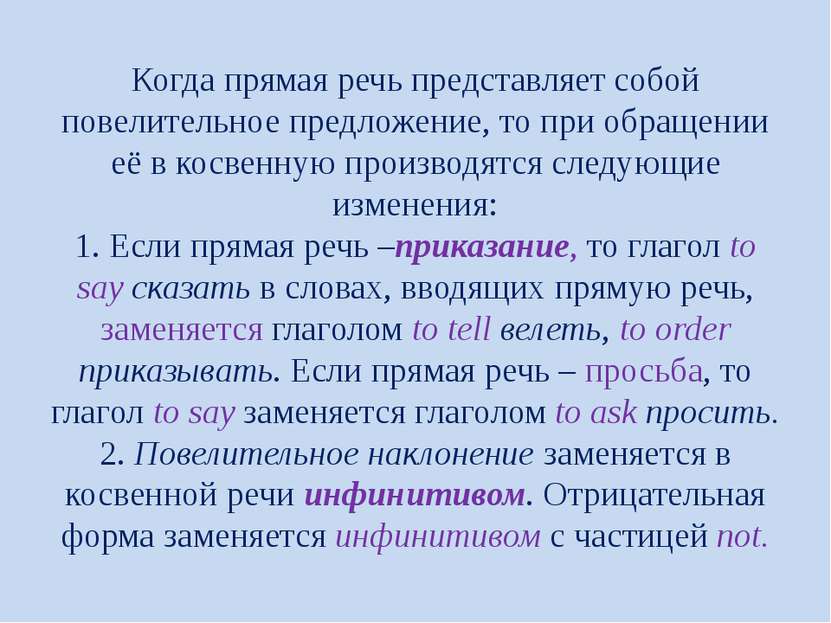
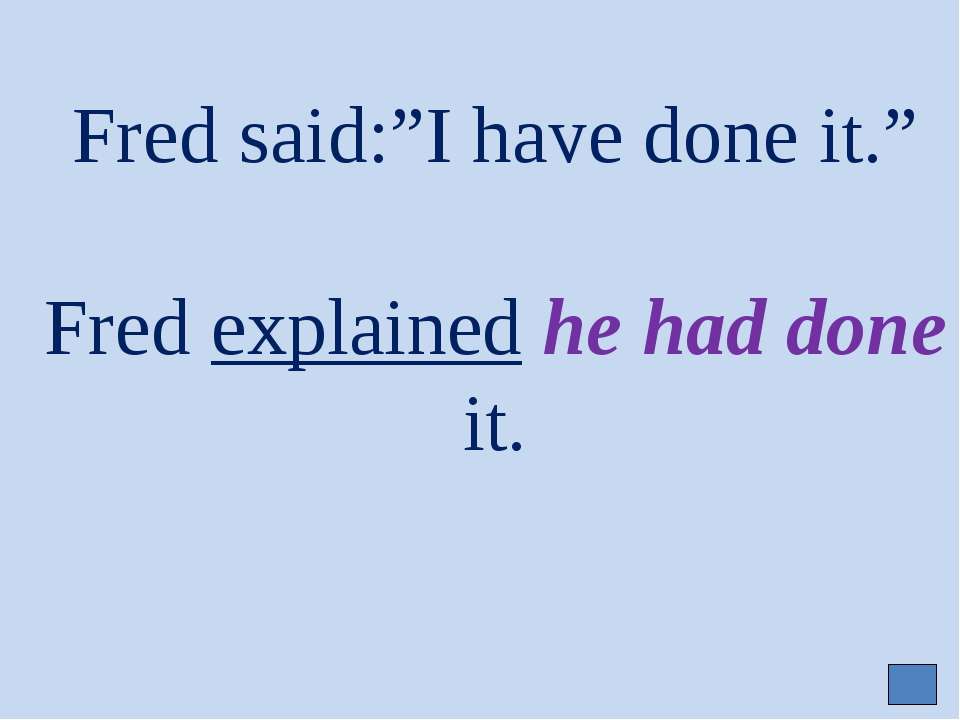
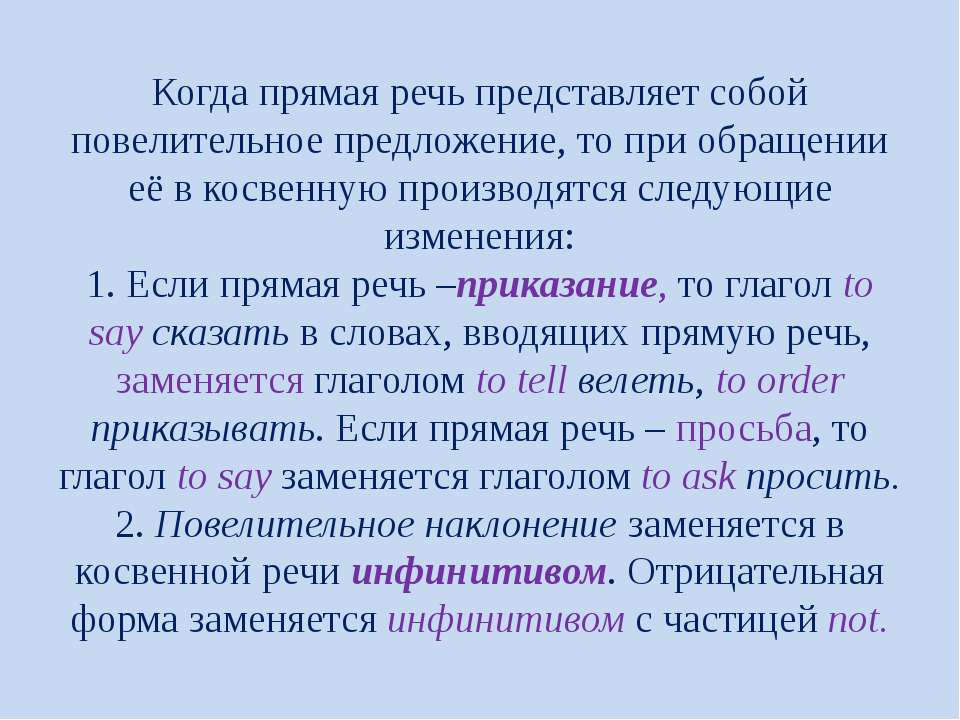
 Когда прямая речь представляет собой повелительное предложение, то при обращении её в косвенную производятся следующие изменения: 1. Если прямая речь –приказание, то глагол to say сказать в словах, вводящих прямую речь, заменяется глаголом to tell велеть, to order приказывать. Если прямая речь – просьба, то глагол to say заменяется глаголом to ask просить. 2. Повелительное наклонение заменяется в косвенной речи инфинитивом. Отрицательная форма заменяется инфинитивом с частицей not.
Cлайд 13
 Использованные источники Reported Speech
Cлайд 14
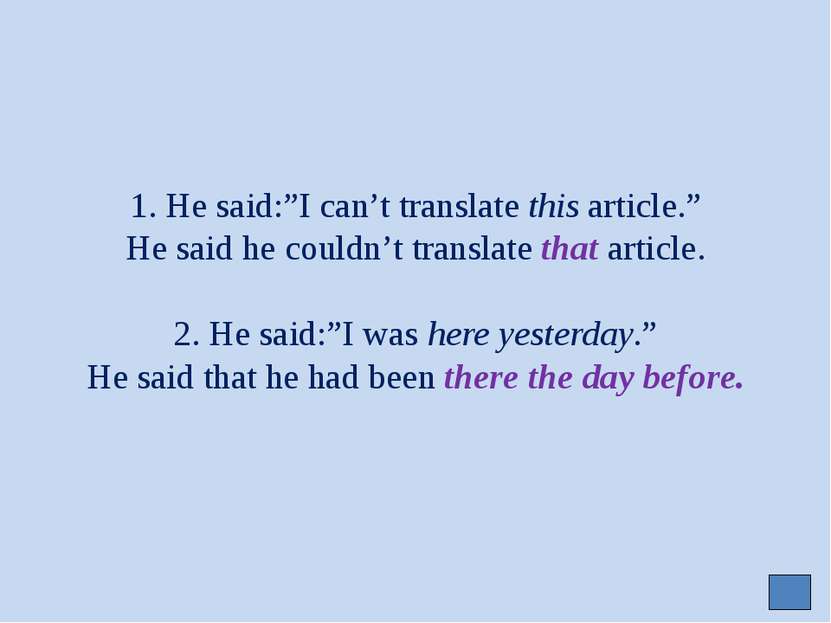
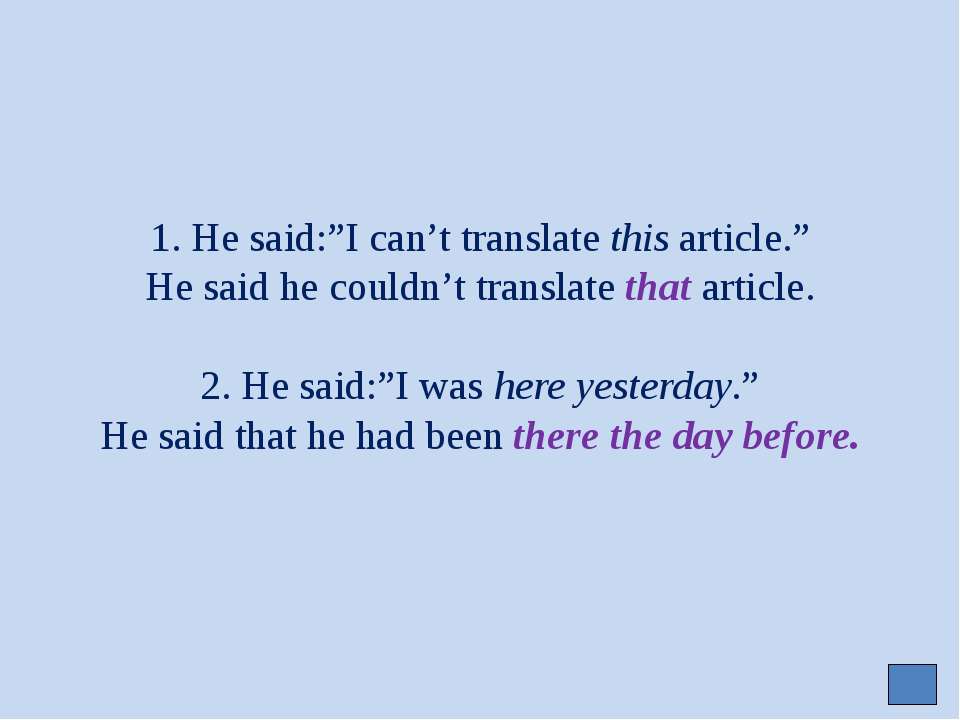
 1. He said:”I can’t translate this article.” He said he couldn’t translate that article. 2. He said:”I was here yesterday.” He said that he had been there the day before.
Cлайд 15
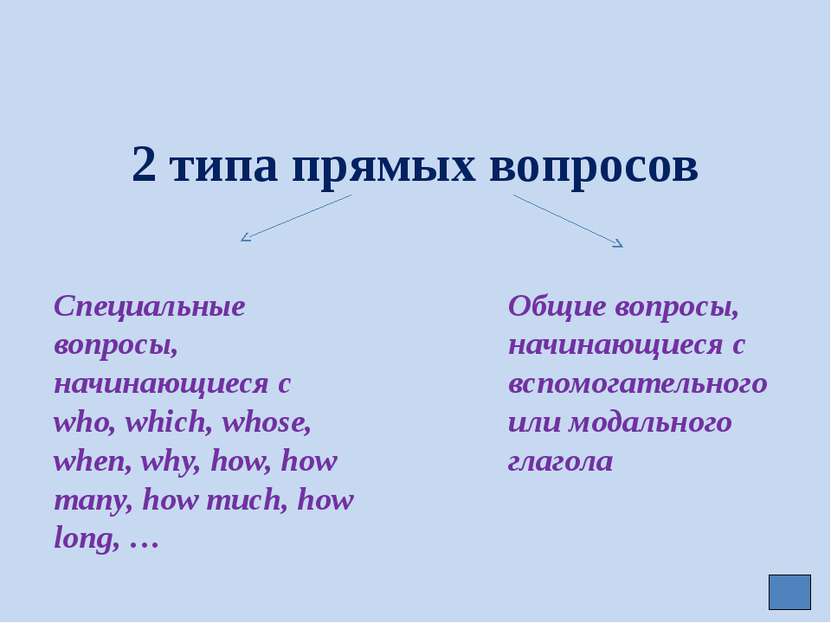
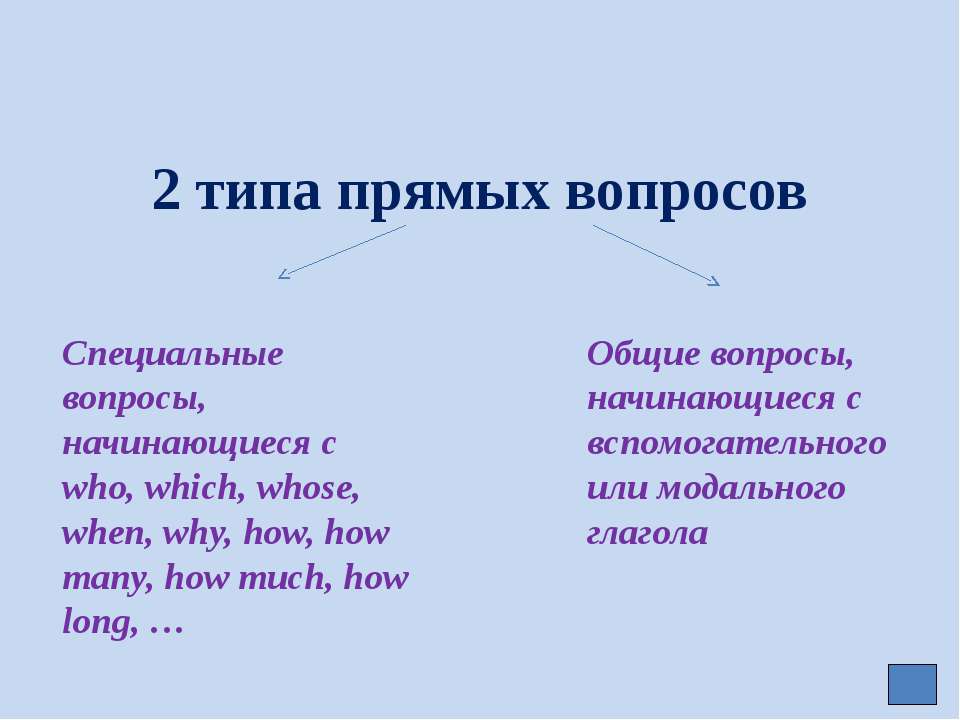
 2 типа прямых вопросов Специальные вопросы, начинающиеся с who, which, whose, when, why, how, how many, how much, how long, … Общие вопросы, начинающиеся с вспомогательного или модального глагола
Cлайд 16
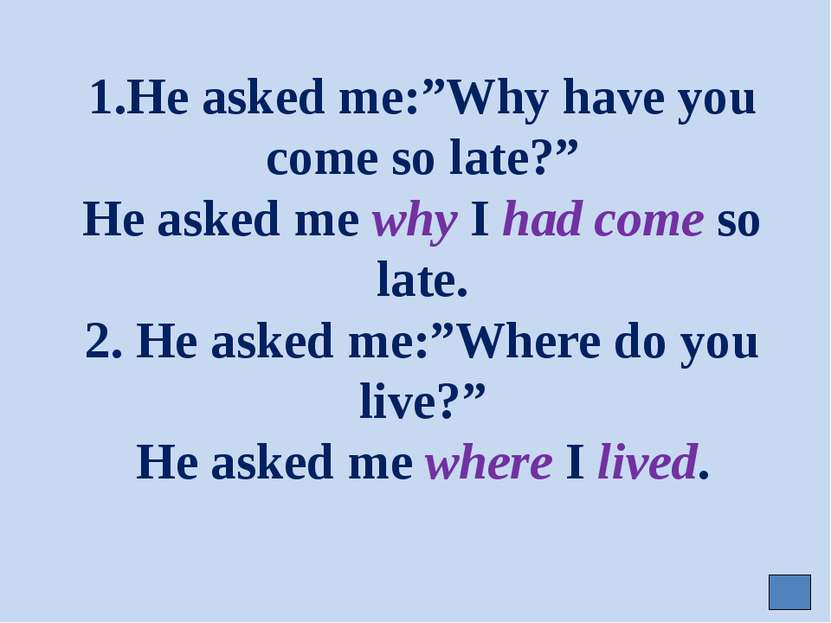
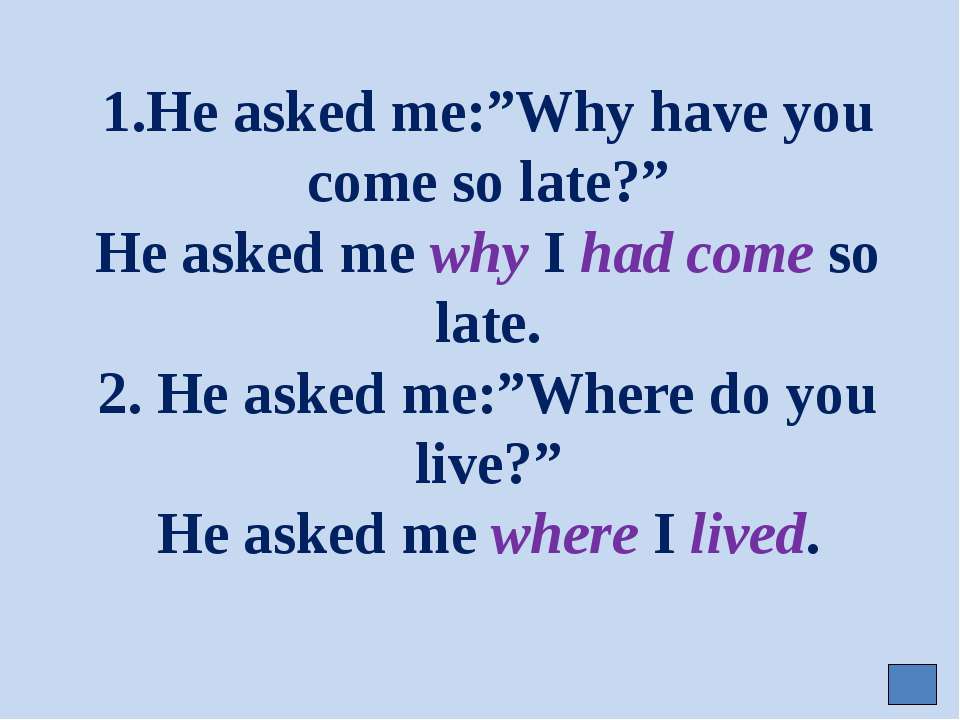
 1.He asked me:”Why have you come so late?” He asked me why I had come so late. 2. He asked me:”Where do you live?” He asked me where I lived.
Cлайд 17
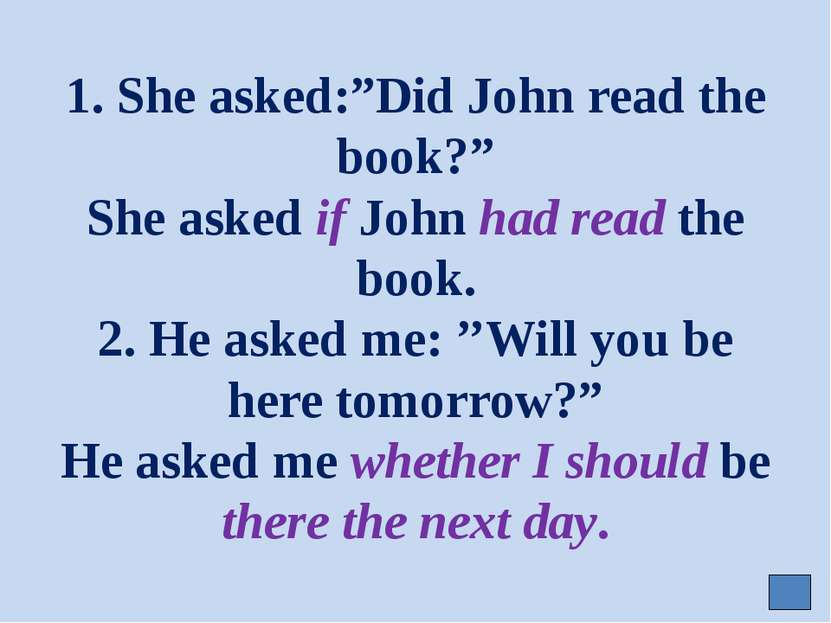
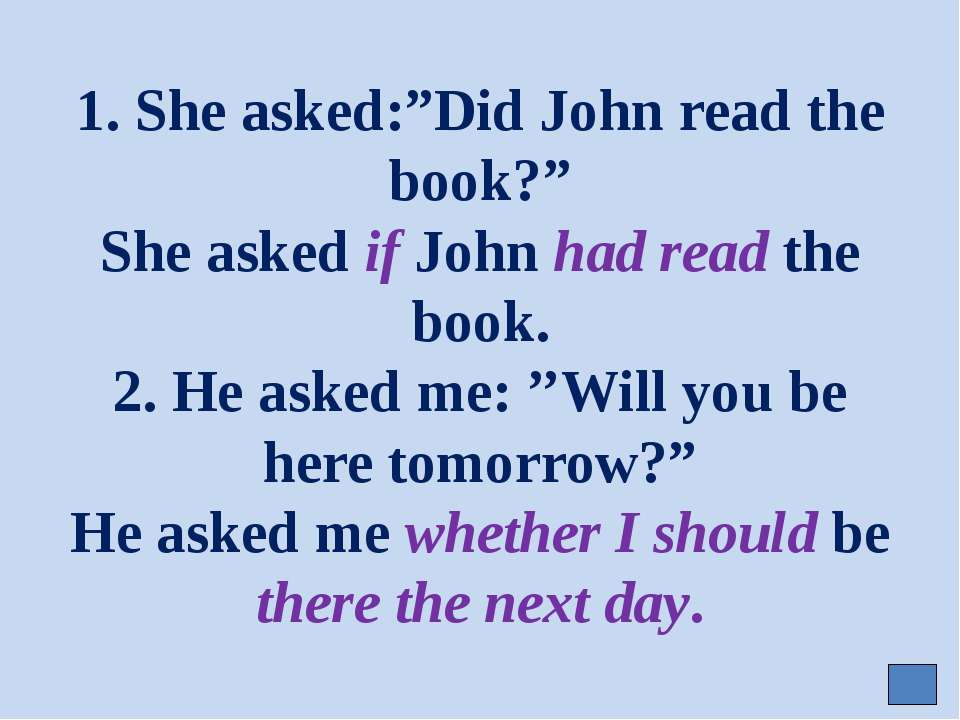
 1. She asked:”Did John read the book?” She asked if John had read the book. 2. He asked me: ’’Will you be here tomorrow?” He asked me whether I should be there the next day.
Cлайд 18
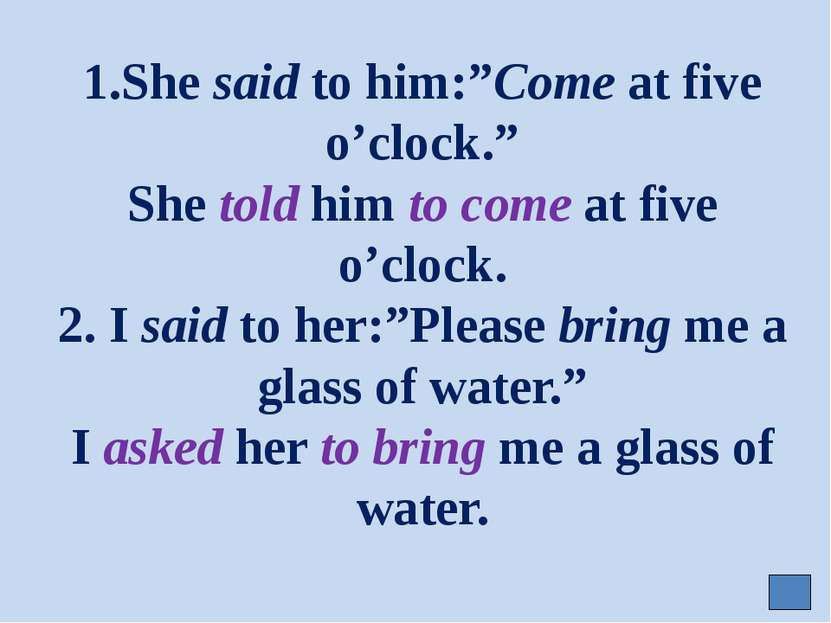
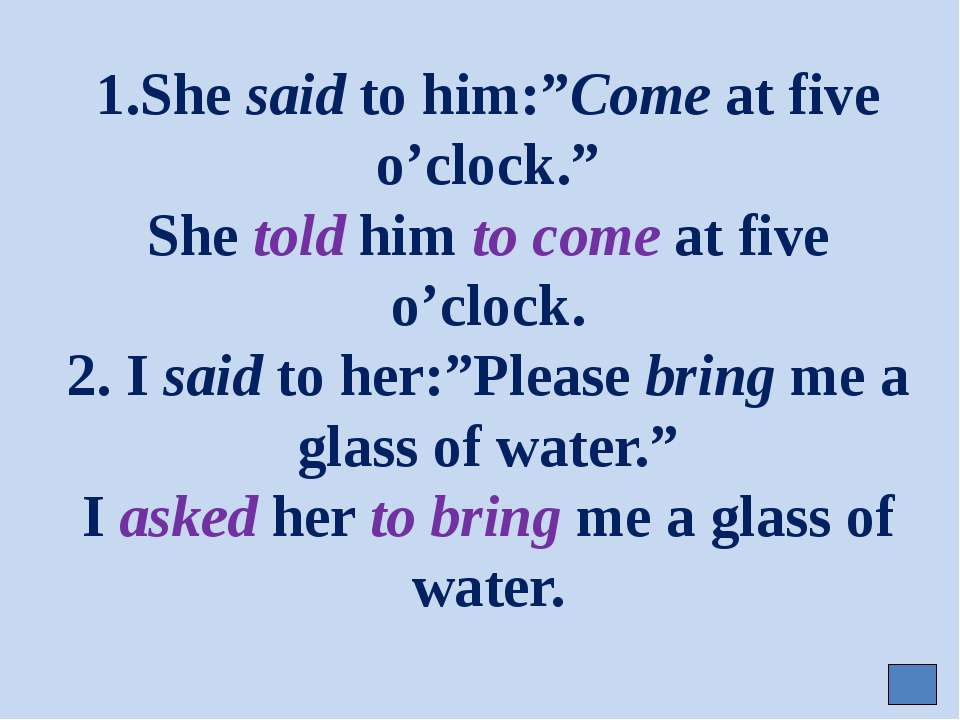
 1.She said to him:”Come at five o’clock.” She told him to come at five o’clock. 2. I said to her:”Please bring me a glass of water.” I asked her to bring me a glass of water.
Cлайд 19
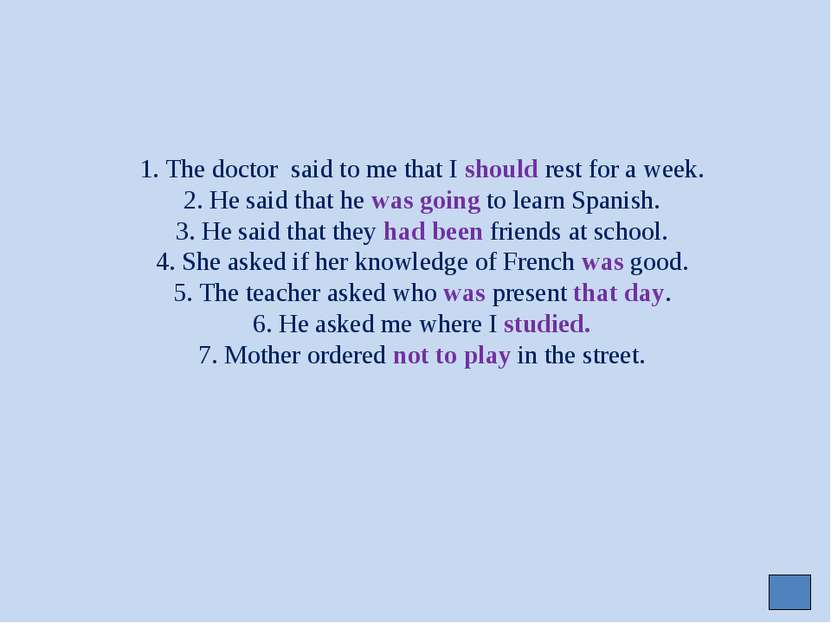
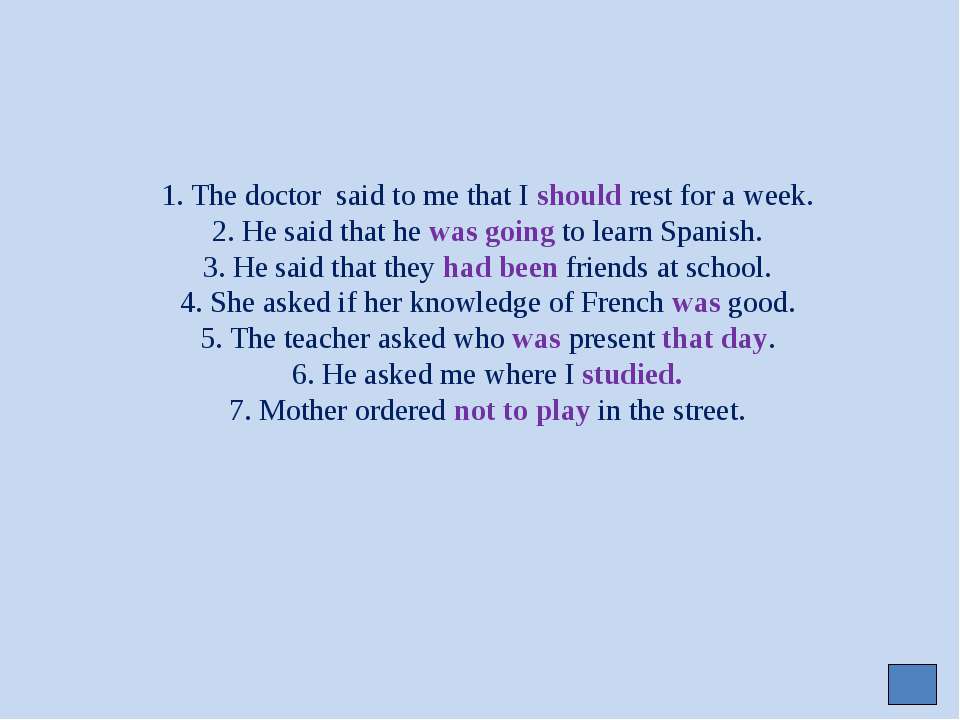
 1. The doctor said to me that I should rest for a week. 2. He said that he was going to learn Spanish. 3. He said that they had been friends at school. 4. She asked if her knowledge of French was good. 5. The teacher asked who was present that day. 6. He asked me where I studied. 7. Mother ordered not to play in the street.
Cлайд 20
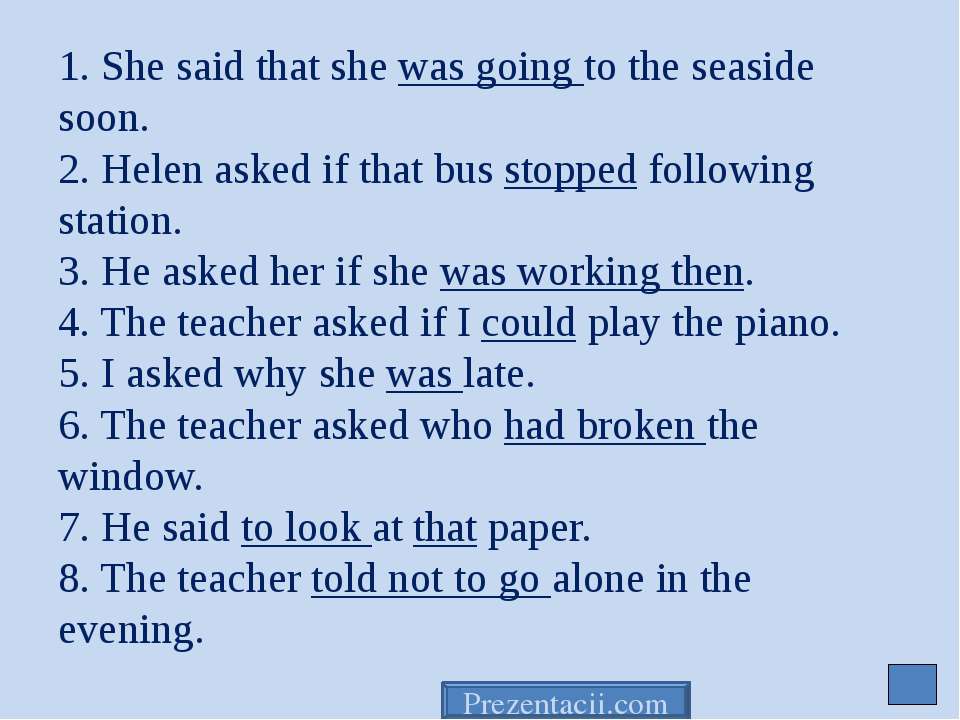
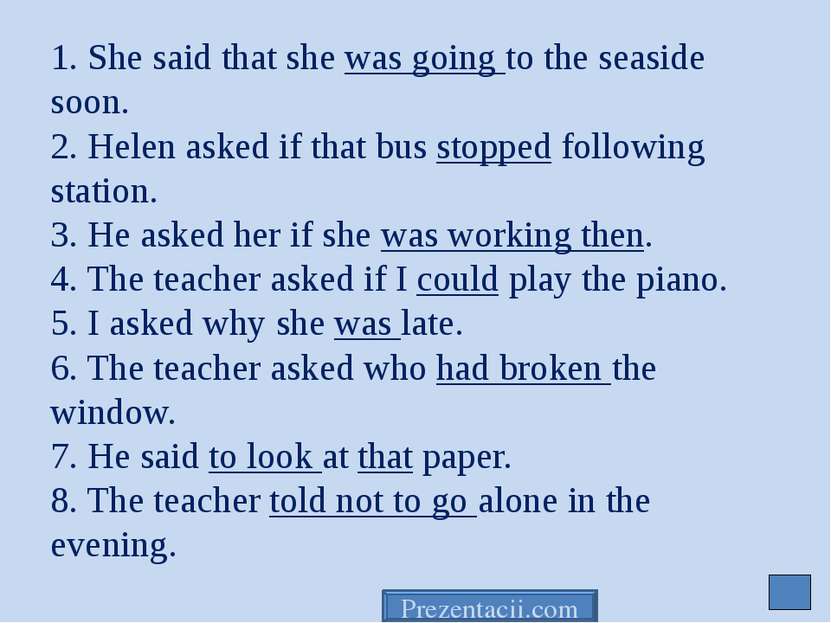
 1. She said that she was going to the seaside soon. 2. Helen asked if that bus stopped following station. 3. He asked her if she was working then. 4. The teacher asked if I could play the piano. 5. I asked why she was late. 6. The teacher asked who had broken the window. 7. He said to look at that paper. 8. The teacher told not to go alone in the evening.
Cлайд 21
Cлайд 22
Cлайд 23
Cлайд 24

Cлайд 25
Cлайд 26

Cлайд 27